
Address
Based in Bangladesh, UK and across Southeast Asia and the World. We are proudly paperless, always online and open for business.
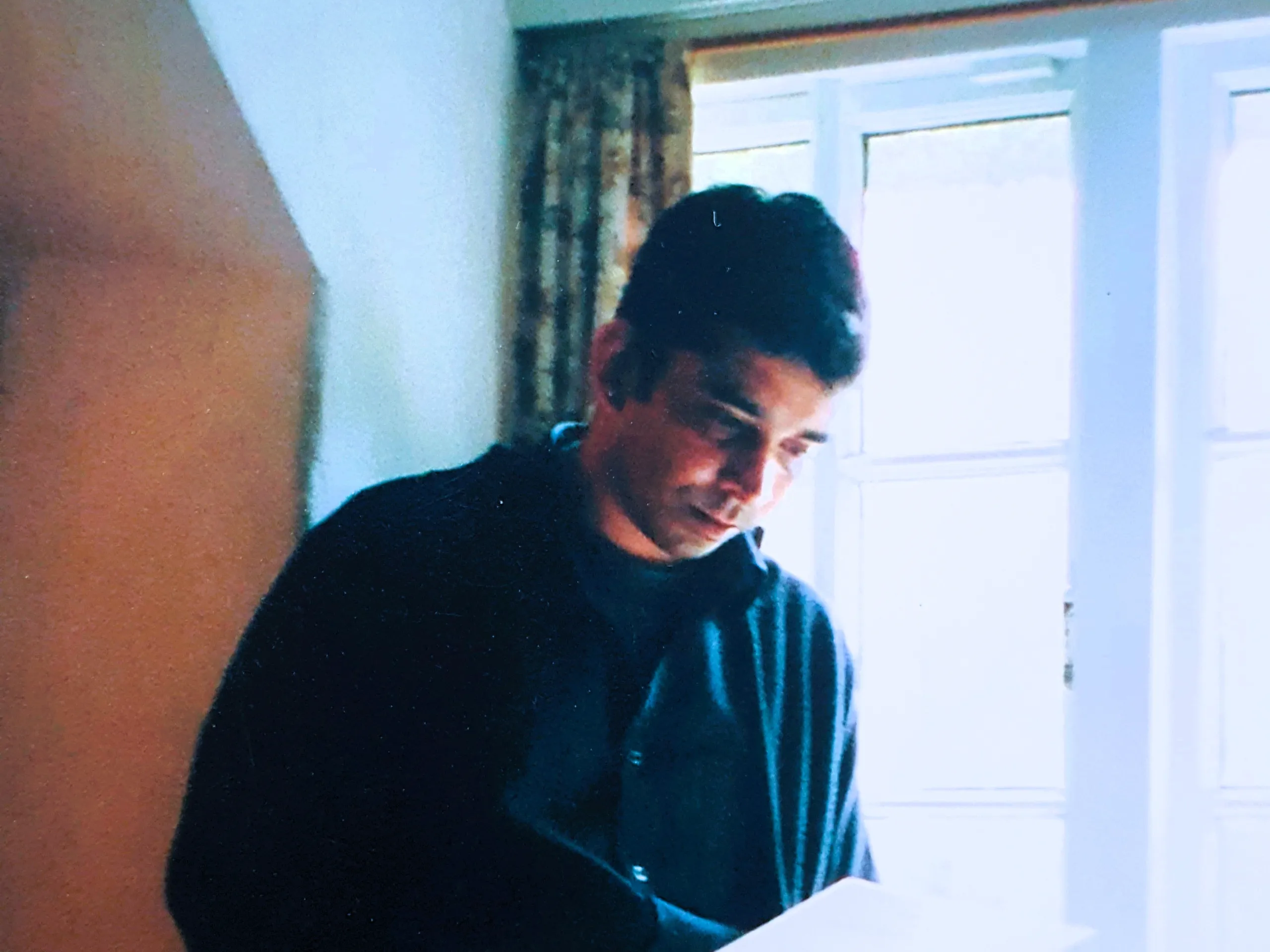

Fragments of Thought & Dreams: And a place for ideas to wander
Not every idea arrives as a fully formed theory. Some begin with a question. Others emerge from an observation, a conversation, a memory or an unexpected connection between things that initially appear unrelated.
This journal is where I explore those ideas.
My interests range across philosophy, technology, creativity, spirituality, human behaviour, systems thinking and the occasional flight of fancy. Some reflections develop into substantial projects. Others remain short observations that are worth recording simply because they offer an interesting way of looking at the world.
I have never been particularly interested in keeping my thinking within neat disciplinary boundaries. Many useful questions sit between established fields, where familiar assumptions can be examined from a different angle.
This is a space for that kind of exploration.
Thought experiments: making the familiar strange
A thought experiment takes an idea and places it in a situation that makes its underlying assumptions easier to see.
It does not necessarily provide a complete answer. Its purpose is often to reveal a question that deserves more serious investigation.
Consider the relationship between intelligence and efficiency. We often assume that a larger or more capable system must produce greater value. But what happens when two systems produce the same result and one consumes substantially more resources to do so?
My Zhu Zhu bird thought experiment explores that question through an obscure piece of information that two AI models must discover. Both eventually find the same answer, but one takes considerably more time and uses a much larger model.
The question is not whether larger models are always wasteful. It is whether we should measure intelligence by size alone when the actual outcome may be identical.
Another thought experiment, Peanut Town, examines the economic consequences of automation. A factory becomes dramatically more productive, but the workers who once bought its products lose their incomes. The thought experiment invites us to consider the relationship between production, employment and demand.
These examples are deliberately simple. Their value lies in the questions they open up, not in pretending to settle complex technical or economic debates.
[Link to: AI Safety, Ethics & Our Relationship with Technology]
[Link to: Shared Values for a Better Future]
Systems thinking: looking beyond the obvious
I am interested in the relationships between things as much as the things themselves.
A business can improve its efficiency while making its supply chain more fragile. An automated system can produce more output while increasing costs elsewhere. A technological advance can solve one problem while creating several new ones.
Understanding these situations requires us to look beyond individual components and examine the wider system.
This is a recurring theme in my work, which I sometimes describe as factory-floor thinking. The idea comes from a simple observation: to understand how a system performs, look not only at what it produces but also at what it wastes, what it overlooks and what consequences emerge elsewhere.
The same approach can be applied to organisations, economics, technology, environmental questions and the way we organise knowledge.
It encourages us to challenge assumptions, examine incentives and consider whether apparent improvements represent genuine progress across the whole system.
Philosophy, spirituality and the human experience
Not all worthwhile questions can be reduced to a technical problem or an economic calculation.
Questions of identity, meaning, responsibility, consciousness and purpose also influence how we understand ourselves and the world around us.
My philosophical interests explore these questions without assuming that every uncertainty has a simple answer. I am interested in the relationship between personal experience and broader patterns, between individual agency and interconnected systems, and between what we can measure and what we may still struggle to explain.
Spirituality, in this context, is part of a wider inquiry into meaning and our relationship with something beyond immediate self-interest.
These reflections coexist with my interest in technology and systems design. They are different ways of approaching questions about how we live, what we value and what we choose to create.
Writing, imagination and the unexpected connection
Creative writing offers another way to explore the human experience.
Fiction allows ideas to be tested through characters, choices, consequences and imagined worlds. A story can examine a philosophical question without turning into an essay, allowing readers to experience its tensions rather than simply being told what to think.
My creative work includes stories shaped by history, mythology, mystery, romance and the sometimes unsettling relationship between perception and reality.
The process of writing also influences how I think about other subjects. Patterns that emerge in fiction can prompt questions about human behaviour, while practical experience can provide the material for stories.
For me, creativity is not separate from analytical thinking. They are complementary ways of exploring possibilities, recognising patterns and discovering connections.
Fragments that become something more
Some ideas remain fragments. Others gradually develop into research, frameworks, stories or practical projects.
An observation about duplicated effort might lead to a question about computational efficiency. That question might develop into a proposal for shared knowledge infrastructure. A reflection on responsibility might become a framework for thinking about the governance of intelligent systems.
The original idea can change as it encounters evidence, criticism and new perspectives.
That is part of the point of keeping a journal: to make room for exploration before every thought has to become a finished argument or a formal deliverable.
Not every idea needs to become a business, a theory or a book. Sometimes an idea is useful because it helps us see something familiar differently.
An invitation to think differently
This journal is a collection of observations, questions, experiments and reflections. Some are serious, some speculative and some simply curious.
They share a common interest in looking beyond the obvious answer, examining assumptions and exploring the connections between seemingly unrelated subjects.
I do not expect every reader to agree with every idea. Disagreement can be useful when it helps us identify weaknesses, clarify assumptions or discover a better explanation.
The aim is not to have the final word. It is to keep asking worthwhile questions.
Sometimes a fragment of thought is just that: a fragment. Sometimes it becomes the beginning of something much larger.
Explore further
- AI Safety, Ethics & Our Relationship with Technology: Practical questions about intelligent systems, safeguards and responsible innovation.
- Shared Values for a Better Future: Philosophy, stewardship and the systems that shape our collective future.
- Ethical.ink: AI safety and governance research.
- Samurai Labs: Research, development and the exploration of practical solutions.